
Our field wants (needs) to collaborate. From SynCell 2026: a booth experiment in open sharing, a year of research into what's holding the community back, and an invitation to help us get the picture right
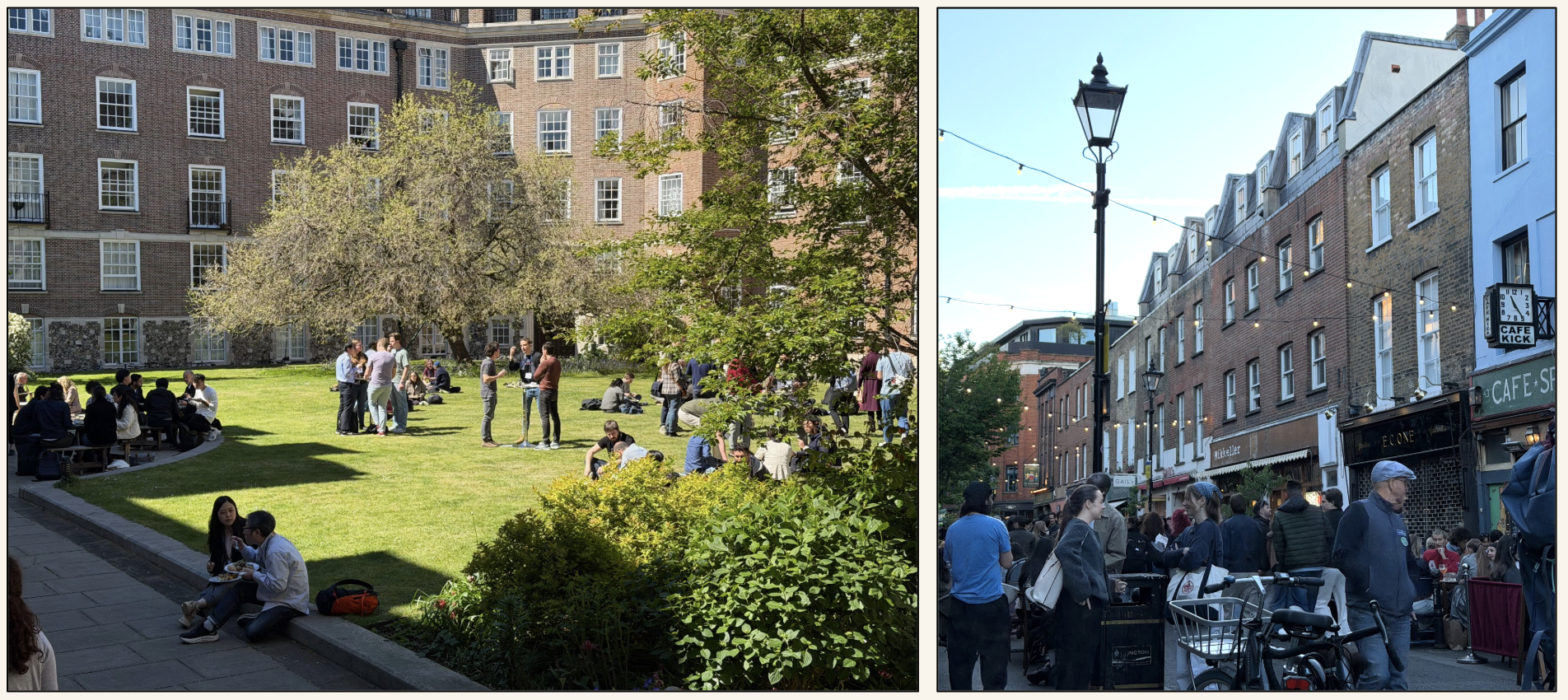
We got back to San Francisco from SynCell 2026 hosted at Goodenough College in London tired but inspired. Discussions that began on the college green and carried into London’s pubs in the evening now continue online over email. Behind all the amazing work on display at the event, the theme of fragmentation emerged again and again.
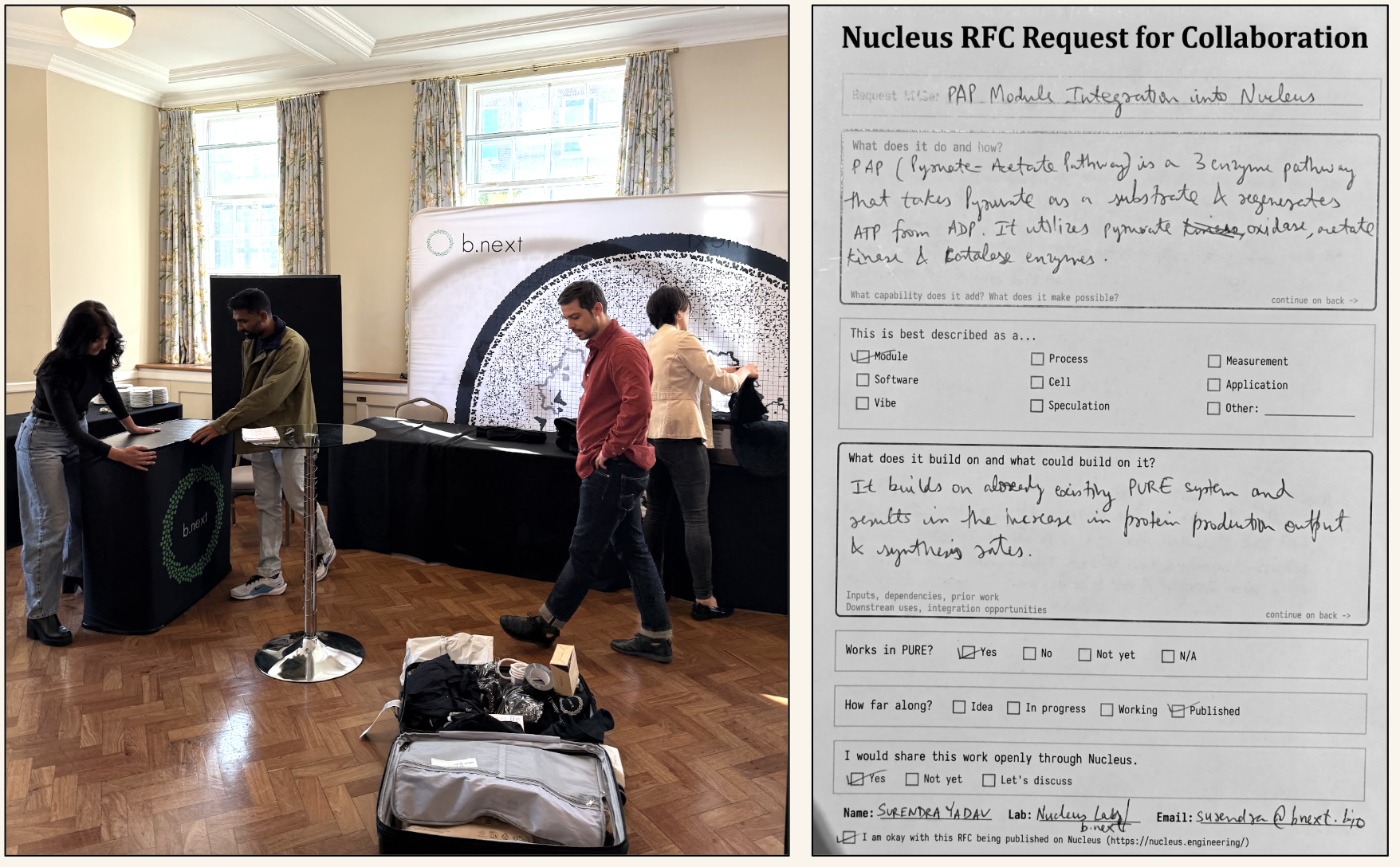
What would an unfragmented community look like? At SynCell, we tried a small experiment at the b.next café (conference booth + espresso machine). The idea was to have people share ideas and works in progress that would be more valuable if shared with the broader community, the same spirit behind Nucleus, the open platform we're building. A simple pen-and-paper form we dubbed the "Nucleus RFC: Request for Collaboration" allowed us to make the experience of collaboration tangible at the conference. That's the model for Nucleus more broadly: an open platform where anyone in the field can propose, contribute, and build on shared infrastructure. A few examples attendees shared at the café:
- Low osmolarity PURE to enable co-culture with mammalian cells.
- Detailed small models of the PURE system to help fully characterize PURE behavior from transcription initiation to resource depletion.
- A commercial kit to enable fast and consistent production of liposomes.
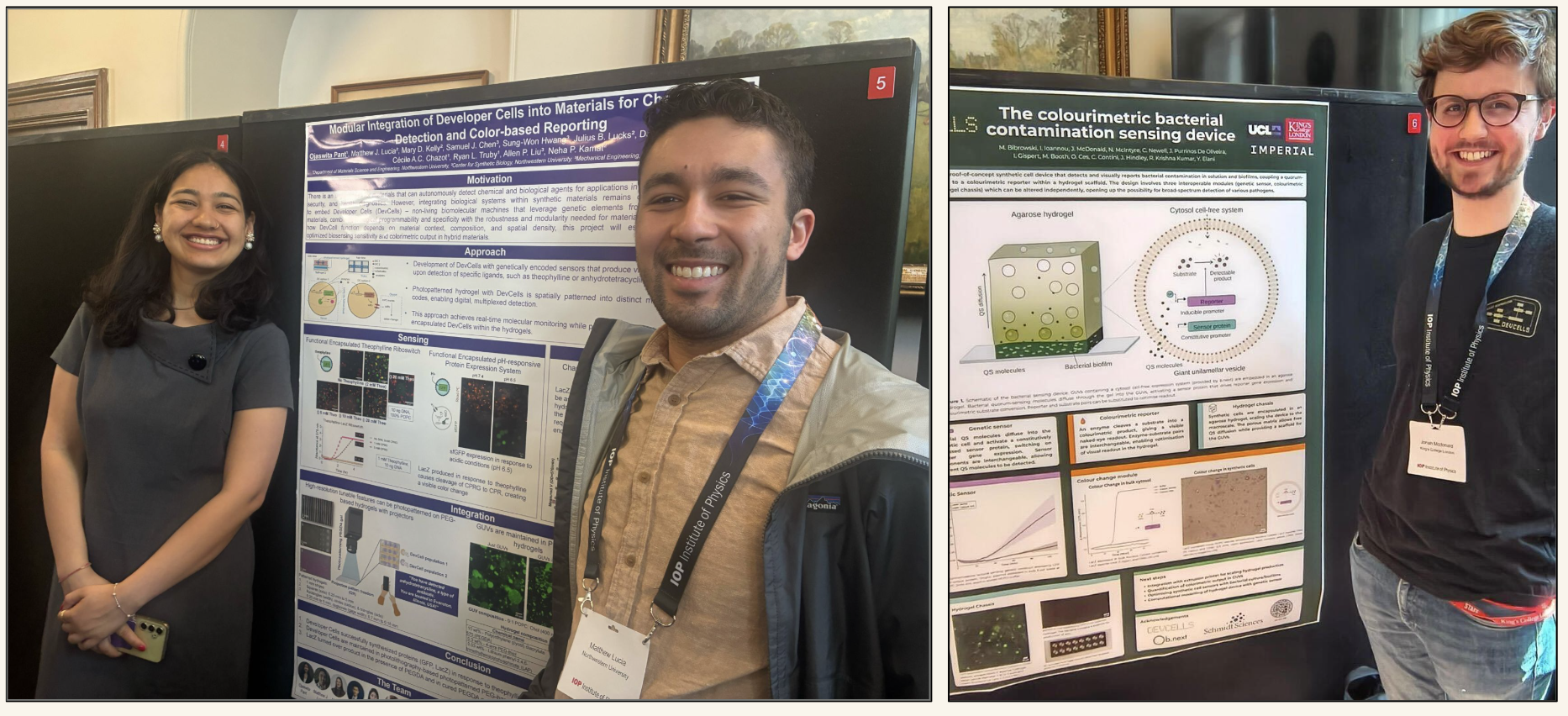
At b.next we’re building the ecosystem, technology, and infrastructure to deploy synthetic cells against the world’s hardest problems. With Nucleus, the open platform at the center of that effort, we're building an integrated approach to engineering synthetic cells — materials, protocols, documentation, and software designed to work together — and with DevNotes, a scientific communication tool designed for how this field actually works, including the negative results that rarely get shared. We've been at it since 2023, starting small. Now we have the team to build this infrastructure. What makes it truly valuable will be what the community builds on top of it. We're already seeing this with projects supported through the DevCells program, two of which were presented at SynCell's poster session. We look forward to the end of the year when their work is contributed to Nucleus, documented for reuse and enabling others to build and extend their projects in new directions.
But building a shared platform means working through hard questions together around openness, credit, data standards, and governance. These questions are the foundation for our field. In 2025, we engaged Conscience, an organization that has helped build large-scale scientific collaborations including the Structural Genomics Consortium, to study how the synthetic cell community works together, what gets in the way of sharing, and what researchers actually need from a platform like Nucleus.
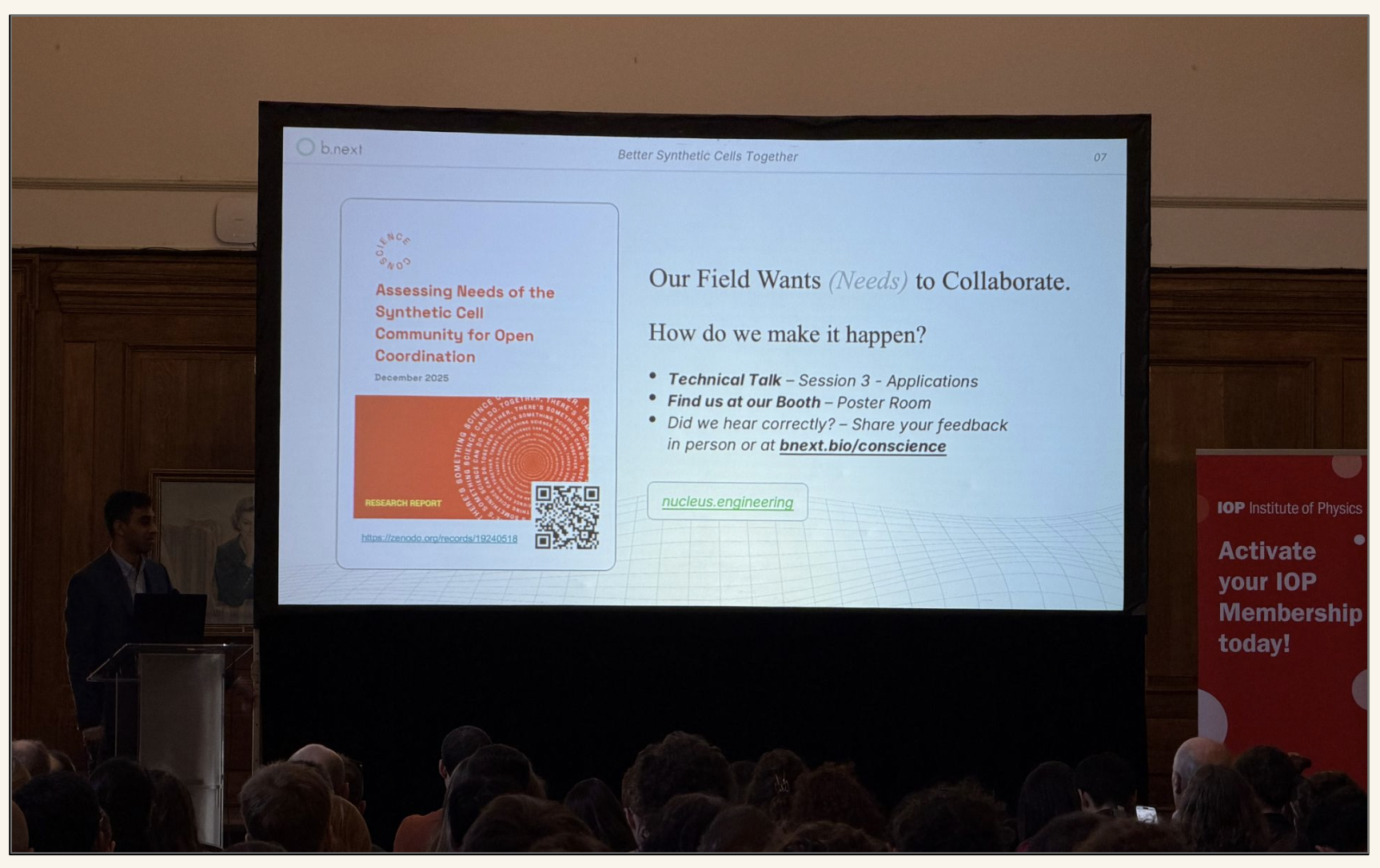
At SynCell, we shared the findings of this study. Now we want to engage a broader set of the community to add nuance to its findings and make sure we heard correctly. We've summarized the key findings in a series of blog posts on the Conscience page of our website, along with the full report available for those who want to go deeper. Please take the survey by May 22nd and imagine with us what an unfragmented community might look like.